
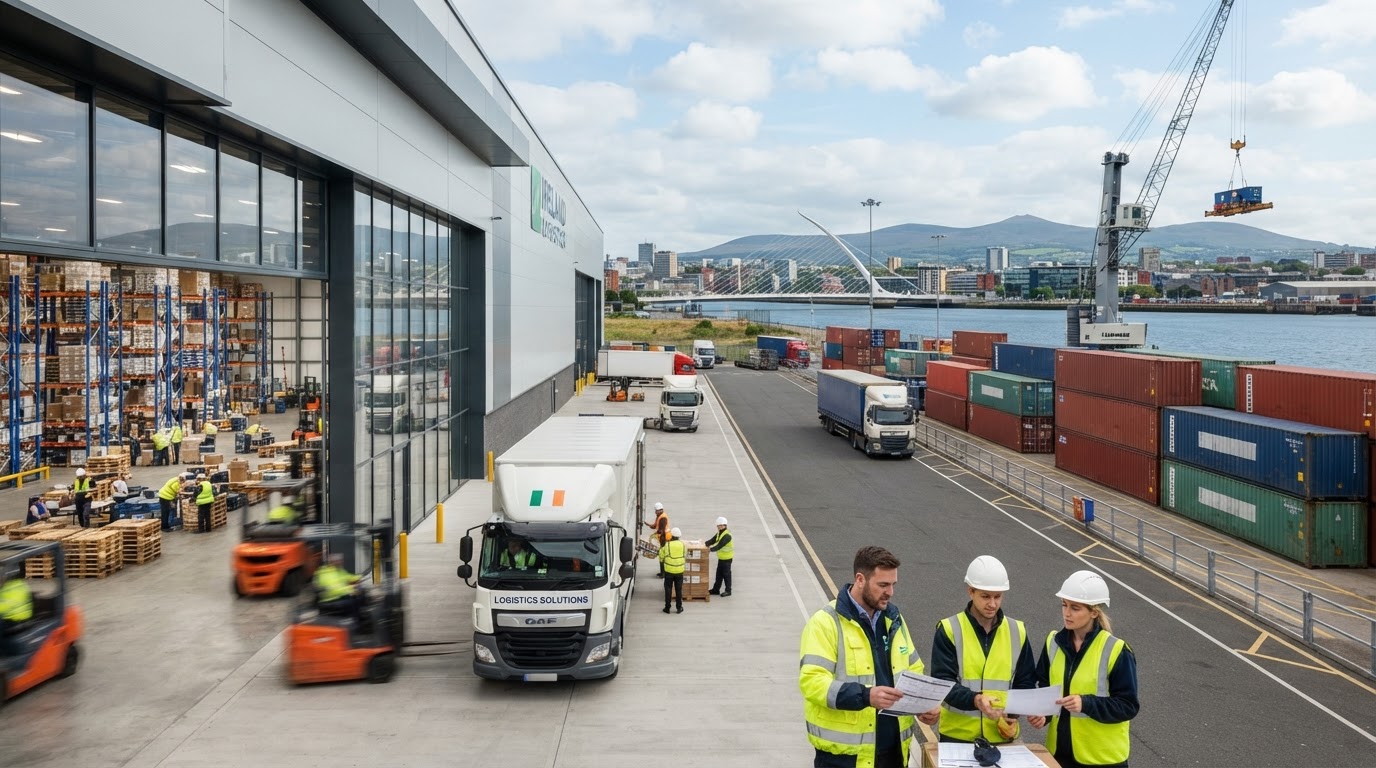
Ireland’s logistics sector plays a vital role in keeping businesses, retailers, manufacturers, healthcare providers and consumers connected. From warehousing and distribution to freight forwarding, last-mile delivery, inventory control and supply chain planning, logistics supports almost every part of the Irish economy. As trade patterns evolve and customer expectations rise, employers across Ireland are looking for skilled logistics professionals who can help operations run efficiently, safely and cost-effectively.
For candidates, this creates strong opportunities. Whether you are starting your career, moving from another industry or looking to progress into a supervisory or management role, logistics offers a practical, fast-moving and resilient career path. Understanding the top skills in demand, how to build them and where the sector is heading can help jobseekers position themselves for long-term success.
Overview of the Logistics Sector in Ireland
Ireland’s location, export-driven economy and strong links with the UK, EU and global markets make logistics a strategically important industry. The sector includes road haulage, warehousing, air and sea freight, courier networks, customs operations, cold chain logistics, e-commerce fulfilment and supply chain management. It is particularly important for industries such as pharmaceuticals, food and beverage, construction, technology, manufacturing and retail.
In recent years, logistics teams have had to respond to major challenges, including Brexit-related customs changes, rising fuel and operating costs, global supply chain disruption, labour shortages and increased demand for faster deliveries. At the same time, the growth of online shopping and more complex customer requirements have increased the need for efficient warehouse operations, accurate stock control and reliable transport planning.
As a result, logistics is no longer viewed simply as moving goods from one place to another. It is now a data-led, customer-focused and technology-enabled function. Businesses need people who can combine operational knowledge with problem-solving, communication and digital skills.
Top Logistics Skills in Demand
One of the most in-demand skills in Irish logistics is warehouse and inventory management. Employers value candidates who understand stock rotation, order picking, packing, goods-in processes, returns handling and warehouse management systems. Accuracy, organisation and attention to detail are essential, especially in sectors where product traceability and compliance are critical.
Transport planning and route optimisation are also highly sought after. With pressure to reduce costs and improve delivery performance, companies need people who can plan efficient routes, manage fleet schedules, respond to delays and coordinate drivers, suppliers and customers.
Digital and systems skills are increasingly important. Experience with warehouse management systems, transport management systems, ERP platforms, spreadsheets and reporting tools can make a candidate stand out. As logistics becomes more data-driven, the ability to interpret information and make practical decisions is a major advantage.
There is also strong demand for customs, compliance and documentation knowledge, particularly for companies trading with the UK and EU. Understanding import and export documentation, customs procedures, health and safety requirements and quality standards can open doors to specialist roles.
Finally, employers consistently look for strong communication, teamwork and problem-solving skills. Logistics can be unpredictable, so professionals must stay calm under pressure, communicate clearly and find solutions quickly when issues arise.
How to Acquire Logistics Skills
There are several routes into the logistics sector in Ireland. Entry-level roles such as warehouse operative, transport administrator, dispatch coordinator or inventory assistant can provide valuable hands-on experience. These positions help candidates understand how goods move through a business and build a strong foundation for progression.
Training and certification can also improve employability. Forklift licences, manual handling, health and safety training, customs documentation courses and supply chain qualifications are all useful depending on the role. For those aiming for management positions, courses in logistics, procurement, supply chain management, business operations or data analytics can be particularly valuable.
Candidates can also build practical digital skills by improving their spreadsheet knowledge, learning reporting basics and gaining exposure to warehouse or transport systems. Even if a specific platform varies by employer, confidence with data, systems and process improvement is widely transferable.
Soft skills should not be overlooked. Communication, reliability, time management and adaptability are often what help candidates progress from operational roles into team lead, supervisor or coordinator positions. Volunteering for additional responsibilities, supporting stock checks, helping with scheduling or assisting with reporting can provide useful experience within an existing role.
Future Trends in Irish Logistics
The future of logistics in Ireland will be shaped by technology, sustainability and changing customer expectations. Automation is becoming more common in warehouses, with businesses investing in scanning systems, robotics, automated storage and improved inventory tracking. This does not remove the need for people; instead, it increases demand for workers who can operate, monitor and improve technology-led processes.
Sustainability is another major trend. Companies are under pressure to reduce emissions, optimise routes, use cleaner vehicles and minimise waste in packaging and operations. Professionals with knowledge of efficient transport planning, green logistics and sustainability reporting may see growing opportunities.
E-commerce will continue to influence the sector, especially in last-mile delivery, fulfilment centres and returns management. Customers expect speed, visibility and accuracy, which means employers will need people who can manage fast-paced operations while maintaining service quality.
Supply chain resilience will also remain a priority. Businesses are likely to focus on better forecasting, supplier diversification, improved stock visibility and risk management. This creates opportunities for candidates with analytical skills, commercial awareness and the ability to plan ahead.
Conclusion
The logistics sector in Ireland offers strong career potential for people with the right mix of practical, technical and interpersonal skills. As businesses continue to adapt to digital transformation, sustainability goals and changing trade requirements, demand will remain high for skilled logistics professionals. For jobseekers, the best approach is to combine hands-on experience with targeted training and a willingness to keep learning. Those who develop strong operational knowledge, digital confidence and problem-solving ability will be well placed to succeed in Ireland’s evolving logistics industry.